Knowledge Management Software for Enterprise Learning and AI Search
Turn enterprise knowledge into institutional intelligence.
Knowledge Central connects enterprise knowledge from systems like Drive, SharePoint, Slack, and Jira,
transforming scattered documents into a governed intelligence layer that powers learning, skills
development, and AI assistance across the Learning OS.
What is Knowledge Central in PlayAblo.AI?
Knowledge Central is PlayAblo.AI’s enterprise knowledge management layer. It connects knowledge from Google Drive, Microsoft SharePoint, Slack, Jira, AWS S3, internal repositories, and document uploads, then structures and governs that knowledge so it can power AI assistants, learning workflows, skills development, and secure enterprise search.
Outcomes leaders care about.
Built for CTO and HR/Ops priorities: trust, speed, and scale.
From Knowledge Storage to Institutional Intelligence
Most organizations already have knowledge repositories. The challenge is not storing documents — it is making enterprise knowledge usable and trustworthy.
Traditional knowledge tools help employees locate documents. Knowledge Central transforms enterprise knowledge into structured institutional intelligence that can power AI assistants, learning systems, and capability development.
- Documents stored across multiple systems
- Search returns document links
- Knowledge locked in SMEs or silos
- Weak integration with learning workflows
- Unified enterprise knowledge ingestion layer
- AI-assisted retrieval grounded in verified sources
- Institutionalized access to expertise
- Directly powers the Learning OS
Knowledge Central vs Traditional Knowledge Bases
Traditional knowledge bases help employees search for documents. Knowledge Central goes further by connecting enterprise sources, structuring documents into AI-ready knowledge, enforcing access controls, and making institutional knowledge usable across AI assistants, learning workflows, and capability development.
Knowledge That Drives Capability — Not Just Answers
Most knowledge systems focus on helping employees find information faster. Knowledge Central goes further.
It connects enterprise knowledge to organizational context, ensuring that information becomes usable in learning, skill development, and operational decision support.
By structuring knowledge and connecting it to roles, processes, and capability frameworks, Knowledge Central enables organizations to turn information into institutional capability.
- AI assistants and contextual guidance
- Learning workflows and training programs
- Skills development and capability building
- Operational decision support
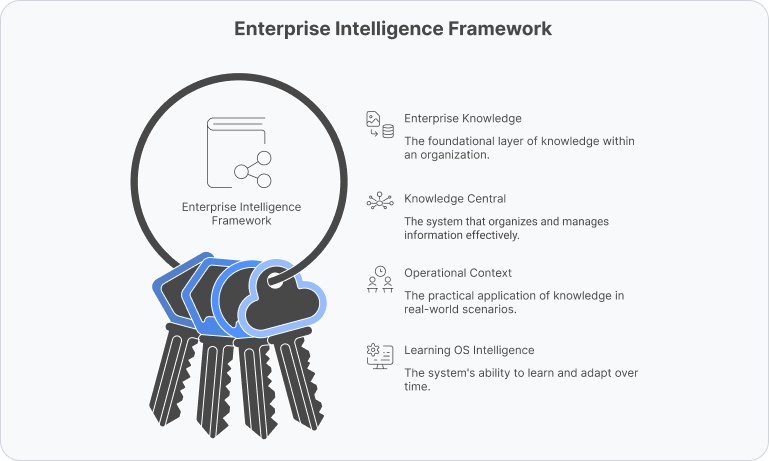
Why AI Assistants Need Governed Enterprise Knowledge
AI assistants are only as useful as the knowledge they can safely access. Knowledge Central grounds AI responses in verified enterprise sources, applies permissions, preserves context, and helps reduce hallucination risk by linking answers back to approved organizational knowledge.
How Knowledge Central Supports Learning and Capability Development
Knowledge Central makes enterprise knowledge usable for workforce learning by turning policies, SOPs, process documents, project knowledge, and internal expertise into structured knowledge that can support course creation, contextual guidance, skills development, and AI-powered employee assistance.
How It Works
Knowledge Central converts scattered enterprise documents into a governed, searchable, AI-ready knowledge base that can support employees, trainers, managers, and AI assistants across the Learning OS.
Knowledge Central integrates with the systems where enterprise knowledge already exists.
Supported connectors include:
- Google Drive
- Microsoft SharePoint
- AWS S3 Buckets
- Slack
- Jira
- Internal document repositories
- Direct document uploads
This allows organizations to unify knowledge without disrupting existing systems.
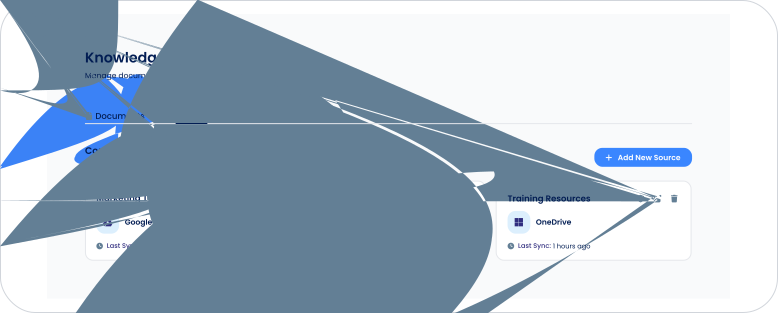
Once connected, documents and content are parsed and structured into intelligence-ready knowledge.
Knowledge Central performs:
- document parsing and chunking
- metadata indexing
- context preservation
- version tracking
This transforms static documents into structured knowledge assets that can power retrieval and AI workflows.
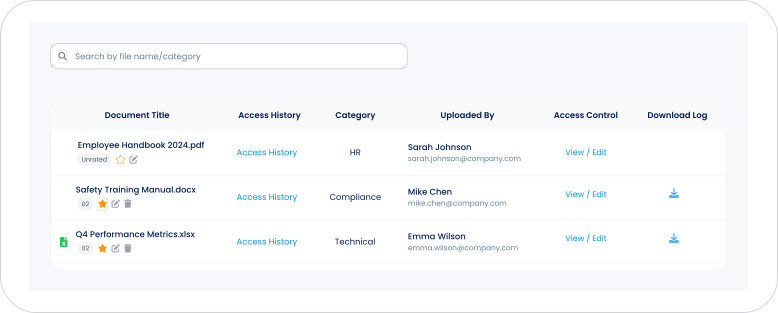
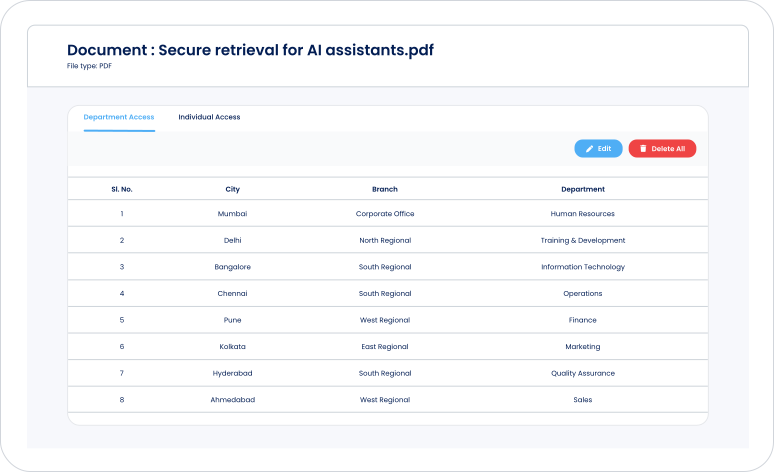
Enterprise knowledge often contains sensitive information. Knowledge Central ensures that access is governed appropriately.
Key governance controls include:
- role-based access control
- department-level knowledge visibility
- document-level permissions
- secure retrieval for AI assistants
These controls ensure users only retrieve information they are authorized to access.
Once structured and governed, enterprise knowledge becomes accessible across the Learning OS.
Knowledge Central powers:
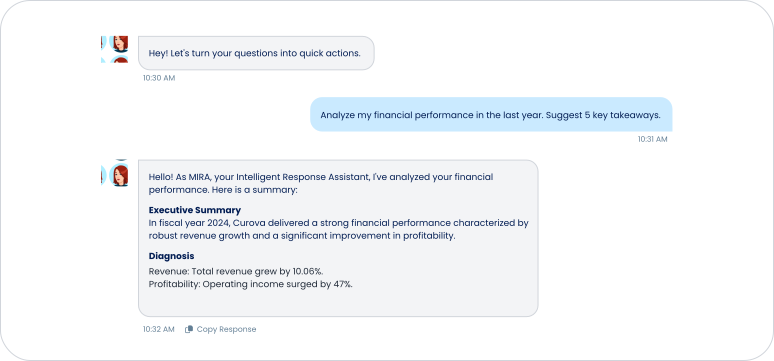
- AI assistants like MIRA
- learning experiences and course creation
- skill development workflows
- contextual enterprise guidance
Organizations can also deploy Knowledge Central as a standalone enterprise knowledge capability, independent of other modules.
Capability Highlights
FAQs
PlayAblo.AI Knowledge Central gives enterprises a governed knowledge management layer to connect scattered documents, secure access, power AI assistants, and convert institutional knowledge into learning and capability development.
Turn Enterprise Knowledge into Institutional Intelligence
Bring your organization’s knowledge together into a governed intelligence layer that powers learning, AI assistance, and capability development across the Learning OS.