What Is a Learning Operating System?
The evolution beyond traditional LMS — and the infrastructure required to align workforce skilling with business goals.
System Architecture
How the Learning OS Aligns Execution to Outcomes
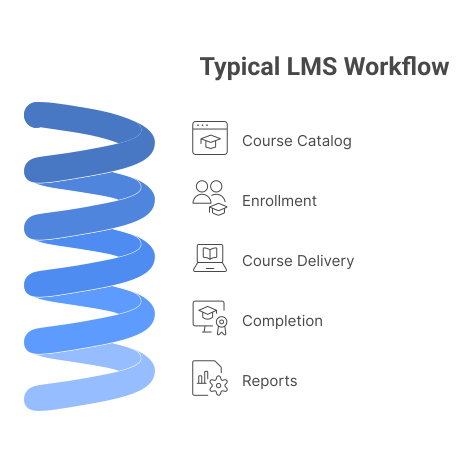
For decades, enterprise learning systems were designed to administer courses. They cataloged content, enrolled employees, tracked completions, and generated reports. For many organizations, that was sufficient when learning was episodic, compliance-driven, or treated as a support function.
But modern enterprises no longer operate in static environments.
Markets shift faster.
Technology cycles shorten.
Regulation evolves.
Customer expectations rise.
Competitive advantage increasingly depends on workforce capability — not just workforce size.
In this context, managing courses is not the same as managing capability.
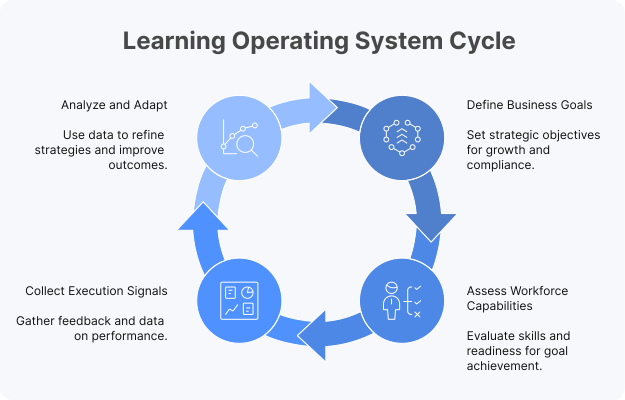
A Learning Operating System (Learning OS) represents a structural shift in how organizations approach workforce skilling. It moves beyond course administration and toward integrated capability infrastructure — connecting business goals, competency intelligence, skilling execution, on-job validation, and measurable performance outcomes into one unified system.
Where traditional LMS platforms manage learning activity, a Learning Operating System manages workforce capability.
That distinction is not semantic.
It is architectural.
Why the Category Shift Matters
When learning operates in isolation
- Budgets are discretionary.
- Skilling priorities are reactive.
- Course completion becomes a proxy for competence.
- Skill visibility remains fragmented.
- Business alignment is assumed rather than measured.
When learning becomes an operating layer
- Business goals define skill priorities.
- Competency frameworks become dynamic.
- Capability data informs workforce planning.
- On-job performance validates skill application.
- Optimization is continuous, not periodic.
Executive Summary
- Aligns workforce skilling directly to business goals
- Maintains real-time skill intelligence across roles
- Orchestrates learning and development execution
- Validates skill application through measurable performance
- Continuously optimizes workforce capability using feedback data
The Structural Limits of Traditional LMS
The LMS Was Built for Course Administration
The traditional Learning Management System emerged to solve a specific problem: managing digital course delivery.
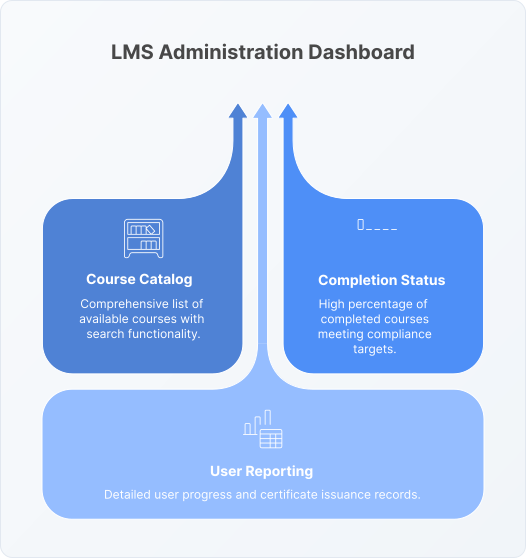
Its core functions were:
- Content cataloging
- Enrollment workflows
- Progress tracking
- Completion reporting
These functions remain valuable. In many environments, they are necessary.
However, the architecture of traditional LMS platforms reflects their original purpose — administering learning events, not orchestrating workforce capability.
The result is a structural constraint.
Learning activity is managed.
Capability is inferred.
Completion Does Not Equal Competence
Traditional LMS metrics often revolve around:
- Course completion rates
- Assessment scores
- Certification status
While useful, these metrics are indirect indicators of skill.
They do not answer:
- Can the employee perform the task in real conditions?
- Has proficiency improved over time?
- Which competencies directly support business goals?
- Where are strategic skill gaps emerging?
In many enterprises, these questions are addressed manually through spreadsheets, performance reviews, or disconnected systems.
This fragmentation limits visibility.
Learning Rarely Drives Strategy
In most organizations, L&D functions operate within predefined budgets and program cycles.
Skill priorities may be informed by business leadership, but the link is often:
- Assumed
- Manual
- Periodic
- Non-systemic
When strategy shifts, the learning system does not automatically reorient capability mapping.
It continues administering content.
This creates a gap between:
Strategic intent
and
Workforce execution readiness.
A traditional LMS was not designed to close that gap.
Linear Flow vs. Feedback System
Architecturally, a traditional LMS operates in a linear model:
Content → Enrollment → Completion → Report
The data flows downward.
There is minimal feedback loop into:
- Competency models
- Role capability mapping
- Business impact analysis
Without a closed loop, optimization becomes episodic.
A Learning Operating System, by contrast, is built as a feedback-driven capability engine.
The distinction is structural — not cosmetic.
Why Enterprises Outgrow LMS Architecture
As organizations scale, they experience increasing complexity:
- Multi-role competency mapping
- Multi-location workforce
- Regulatory variability
- Rapid technology shifts
- Cross-functional skill requirements
In this environment, course administration alone cannot deliver capability visibility.
Enterprises require:
- Skill intelligence dashboards
- Dynamic competency frameworks
- On-job validation workflows
- Performance-linked measurement
These requirements exceed the architectural scope of traditional LMS platforms.
This is the inflection point at which organizations begin exploring the Learning Operating System model.
Formal Definition of a Learning Operating System
A Learning Operating System (Learning OS) is an integrated enterprise infrastructure that connects business strategy, competency intelligence, learning execution, skill validation, and performance measurement into a continuous optimization system for workforce capability.
Unlike traditional LMS platforms, which manage learning events, a Learning OS manages capability as a strategic asset.
It operates as a layered system composed of:
- Strategic Alignment Layer
- Skill Intelligence Layer
- Learning & Execution Layer
- Validation & Measurement Layer
- Optimization & Feedback Layer
Each layer performs a distinct function, yet all operate within a unified data model.
Core Characteristics of a Learning Operating System
1. Strategy-Linked Skill Mapping
Business objectives cascade into:
- Competency frameworks
- Role capability definitions
- Skill priority matrices
This alignment is systemic, not manual.
2. Continuous Skill Intelligence
The system maintains real-time visibility into:
- Individual proficiency levels
- Role readiness
- Organizational skill gaps
- Emerging capability trends
Skill data is not static. It evolves.
3. Integrated Learning Execution
Content delivery, blended learning, AI-generated courses, and learning paths operate within a structured skill framework.
Learning is not an isolated activity — it is tied to capability progression.
4. Validated Skill Application
On-job evaluations, assessments, supervisor feedback, and performance metrics confirm whether learning translates into measurable skill application.
Capability is observed, not assumed.
5. Closed-Loop Optimization
Performance outcomes feed back into:
- Competency adjustments
- Skill gap prioritization
- Learning path refinement
- Strategic capability planning
This feedback loop transforms learning from periodic training into continuous workforce development.
Architectural shift
The difference between LMS and Learning OS can be summarized structurally: LMS manages learning events. Learning OS manages capability as infrastructure.
The Five Foundational Layers of a Learning OS
A Learning Operating System is not a single feature. It’s an operating model — a set of integrated layers that connect business direction to workforce execution and measurable outcomes. The framework below is deliberately practical: each layer answers a different executive question, and each layer has clear “inputs → decisions → outputs” so your skilling system is explainable, governable, and scalable.
Strategic Alignment Layer
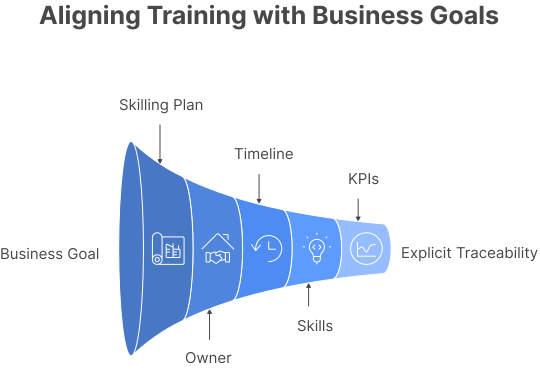
This layer connects skilling to business goals — explicitly. Instead of treating learning requests as isolated “programs”, you start with a business objective (revenue growth, customer experience, operational efficiency, compliance), translate it into workforce capability needs, and then allocate skilling effort with clear prioritization. The practical output is traceability: for any major initiative, you can answer what skills matter, for which roles, by when, and why.
Example
Goal: Reduce customer complaint TAT in 90 days
Outcome
A goal-linked skilling plan with owner, timeline, and KPIs
Skill Intelligence Layer
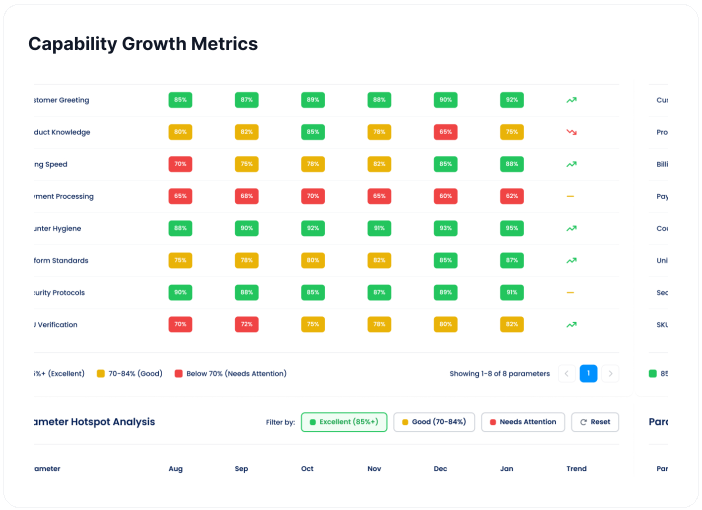
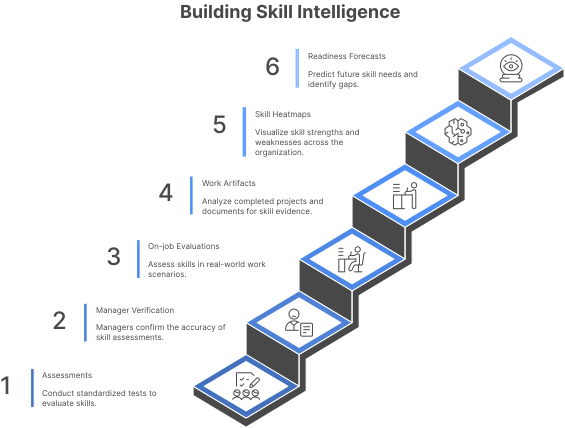
This layer gives you a living, queryable view of capability — not just course completion. It maps skills to roles, defines proficiency levels, and captures evidence through assessments, manager verification, on‑job evaluations, and work artifacts. The outcome is operational: leaders can see skill gaps by business unit, cohort, location, and manager, and can forecast readiness against upcoming goals.
Example
Role: Field Sales Rep → Skill: Objection handling (Level 1–5)
Outcome
Real-time skill heatmaps and readiness forecasts
Learning & Execution Layer
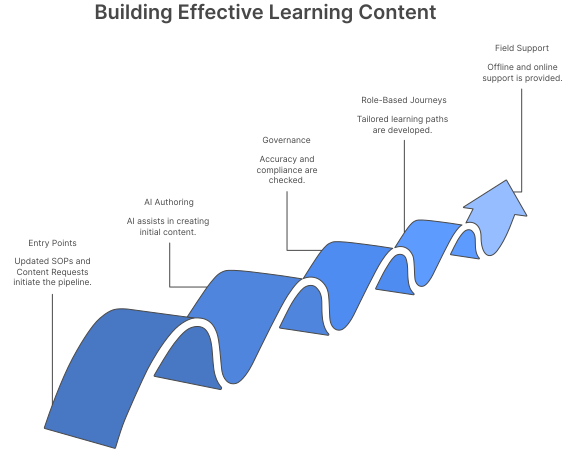
This is where learning becomes a system of execution. The Learning OS orchestrates role-based journeys, pushes just-in-time content to the right audience, and supports both office and field environments (including offline access). AI-assisted authoring accelerates content creation, while governance ensures training remains accurate, current, and consistent with policy and SOP changes.
Example
Auto-create a SCORM micro-module from an updated SOP
Outcome
Faster rollouts with consistent learner experience
Validation & Measurement Layer
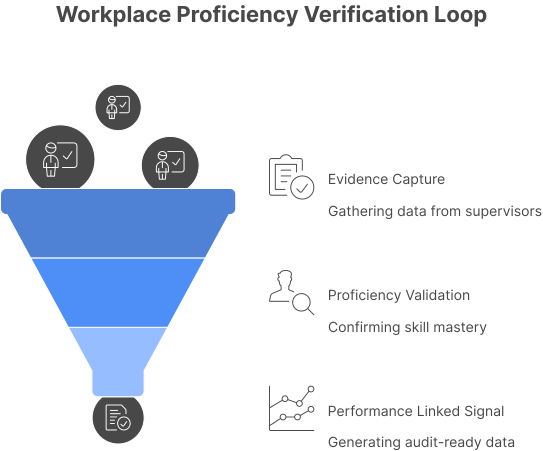
A Learning OS treats proficiency as something you prove — not something you assume. This layer captures evidence through proctored assessments, in-video checks, supervisor feedback, and on‑job evaluations (OJEs). It translates learning activity into performance-linked signals: proficiency progression, compliance readiness, quality audits, and field execution scores.
Example
Supervisor OJE after training: “Pitch + Needs analysis” checklist
Outcome
Proficiency evidence tied to real work conditions
Optimization & Feedback Layer
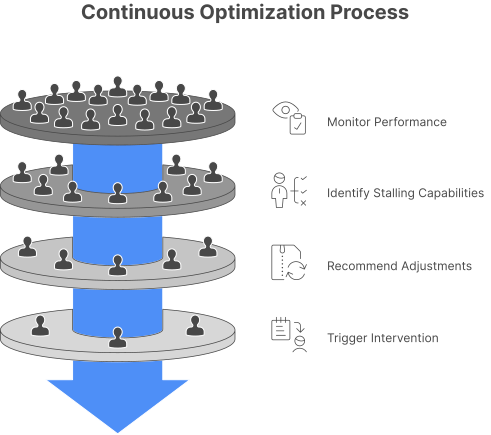
This layer closes the loop: outcomes inform what you change next. It monitors performance signals, identifies where capability is improving (or stalling), and recommends adjustments — content updates, re-assessments, manager coaching tasks, or workflow nudges. Importantly, optimization is continuous and measurable: the system learns which interventions move the needle for each cohort and context.
Example
Detect drop in audit scores → trigger refresher + manager follow-up
Outcome
Continuous performance improvement with visibility
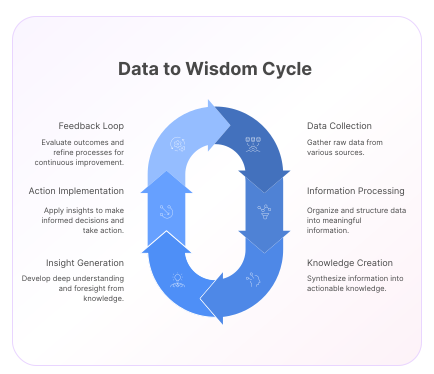
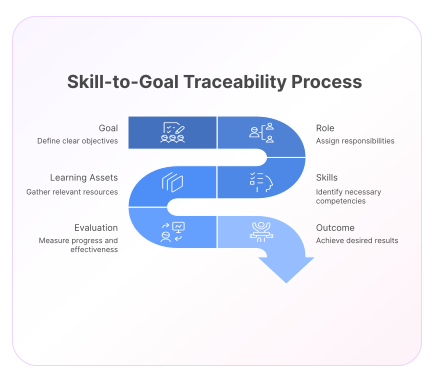
Strategic Alignment in Practice
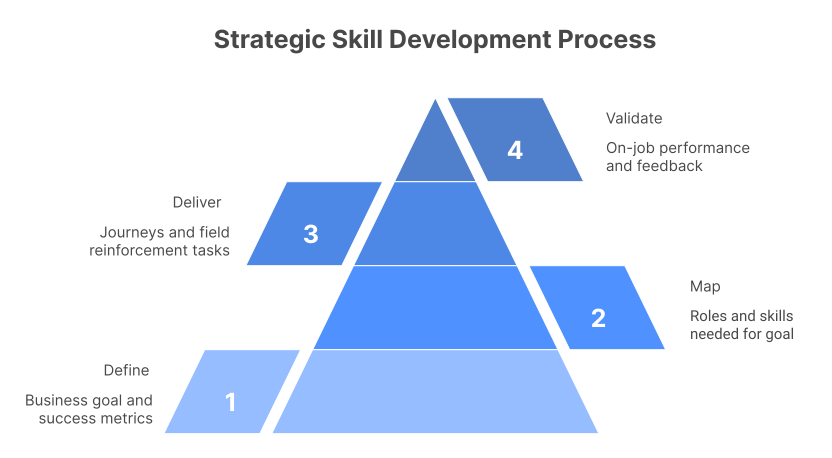
Strategic alignment is the difference between “training activity” and “capability execution.” In a Learning OS, goals don’t sit in a deck — they become structured inputs that drive role priorities, skill targets, learning journeys, and validation. The workflow below shows how a goal becomes an observable change in workforce performance.
How goal-linked skilling works
Think of this as an operating loop with clear handoffs. Leaders define what must improve; the Learning OS translates that into who must change, which skills must move, and how we prove it.
- Input: Business goals, operating constraints, and critical roles.
- Translation: Role-skill requirements, proficiency targets, and timelines.
- Execution: Learning + coaching + on-job tasks, delivered contextually.
- Proof: Assessments, OJEs, audits, and performance-linked outcomes.
- Optimization: Continuous nudges and content changes based on results.
The practical promise: you can explain to a CFO or COO why a skilling investment exists, who it targets, and what KPI it should influence.
Step 1
Define business goal + success metric
Step 2
Map goal → roles → skills (target proficiency)
Step 3
Deliver journeys + field reinforcement tasks
Step 4
Validate on-job + optimize with feedback loops
STRATEGIC ALIGNMENT WORKFLOW
Define Goals
Set strategic objectives &
success metrics
Map Roles
Identify roles, skills
& proficiency needs
Execute Learning
Deliver training &
on-job reinforcement
Validate Impact
Assess results &
optimize continuously
Business Input
Goals & constraints
Skill Mapping
Role requirements
Learning Delivery
Training paths
Performance Proof
KPI validation
The Learning OS Maturity Model
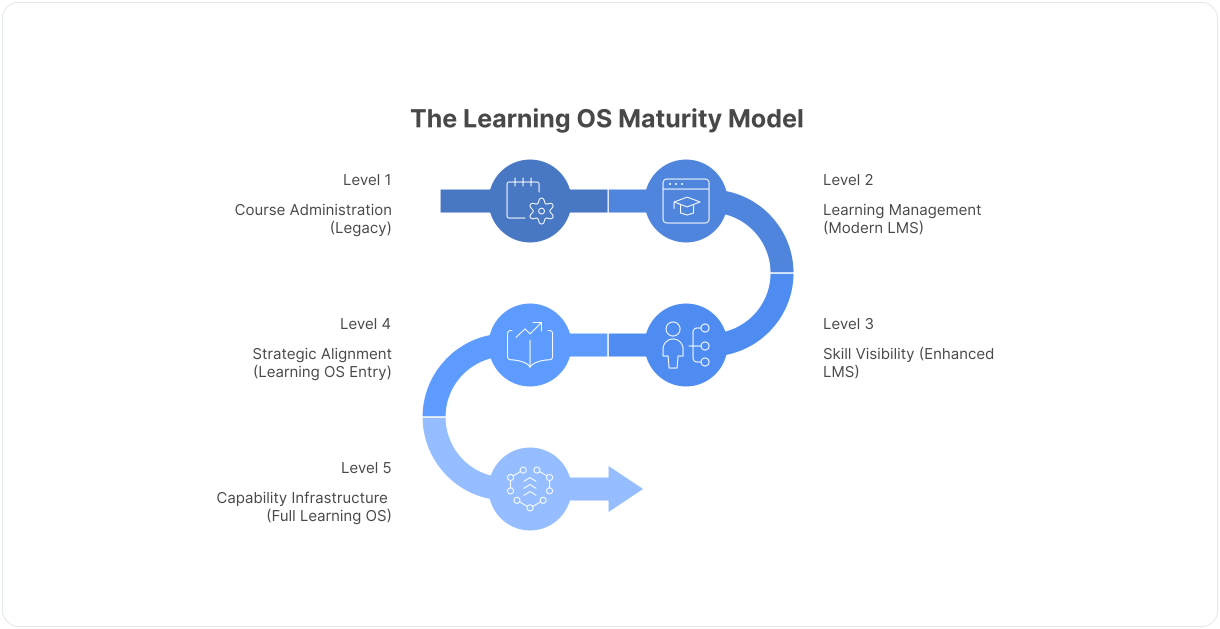
Most organizations don’t “switch categories” overnight. They evolve. This maturity model is meant to be advisory — a way to understand where you are today, what capabilities are missing, and what a sensible next step looks like. It also clarifies where a traditional LMS, a modern LMS, and a Learning Operating System typically sit on the curve.
Maturity
Level 1 — Course Administration
Training is managed as a catalogue and a calendar. Success is measured by enrollments, attendance, and basic completion. Reporting is largely manual and retrospective. This is where many legacy deployments start — useful for coordination, but limited for capability impact.
Maturity
Level 2 — Learning Management
Content delivery becomes structured and scalable: learning paths, cohorts, assessments, compliance reminders, and better reporting. This is the “strong LMS” stage. It improves training operations significantly — but still treats skills and performance as downstream assumptions.
Maturity
Level 3 — Skill Visibility
You begin tracking skills explicitly: role-skill matrices, proficiency levels, and targeted journeys. Modern LMS platforms can reach this stage with add-ons. The key shift is that learning is no longer only content — it’s connected to capability data, even if validation remains partial.
Maturity
Level 4 — Strategic Skilling Alignment
Business goals become first-class inputs. Skilling priorities, audience selection, and proficiency targets are derived from strategy — not ad hoc requests. Leaders can trace initiatives to role readiness and can justify budgets based on measurable outcomes. This is the entry point to Learning OS thinking.
Maturity
Level 5 — Capability Intelligence Infrastructure
Capability becomes an operating system: continuous measurement, on-job validation, performance feedback loops, and automation that adapts interventions. The platform behaves like infrastructure — integrating HR/ERP/ops systems and producing real-time visibility into workforce readiness and ROI.
How LMS and Learning OS typically map to the model
A traditional LMS usually operates at Level 1–2 (courses, enrollment, completion, reporting). A modern LMS can reach Level 3 by adding skill frameworks and better analytics. A Learning Operating System is designed for Levels 4–5 — goal-driven skilling, on-job validation, and continuous performance optimization.
Traditional LMS
Level 1–2
Modern LMS
Up to Level 3
Learning OS
Level 4–5
Learning OS vs Traditional LMS
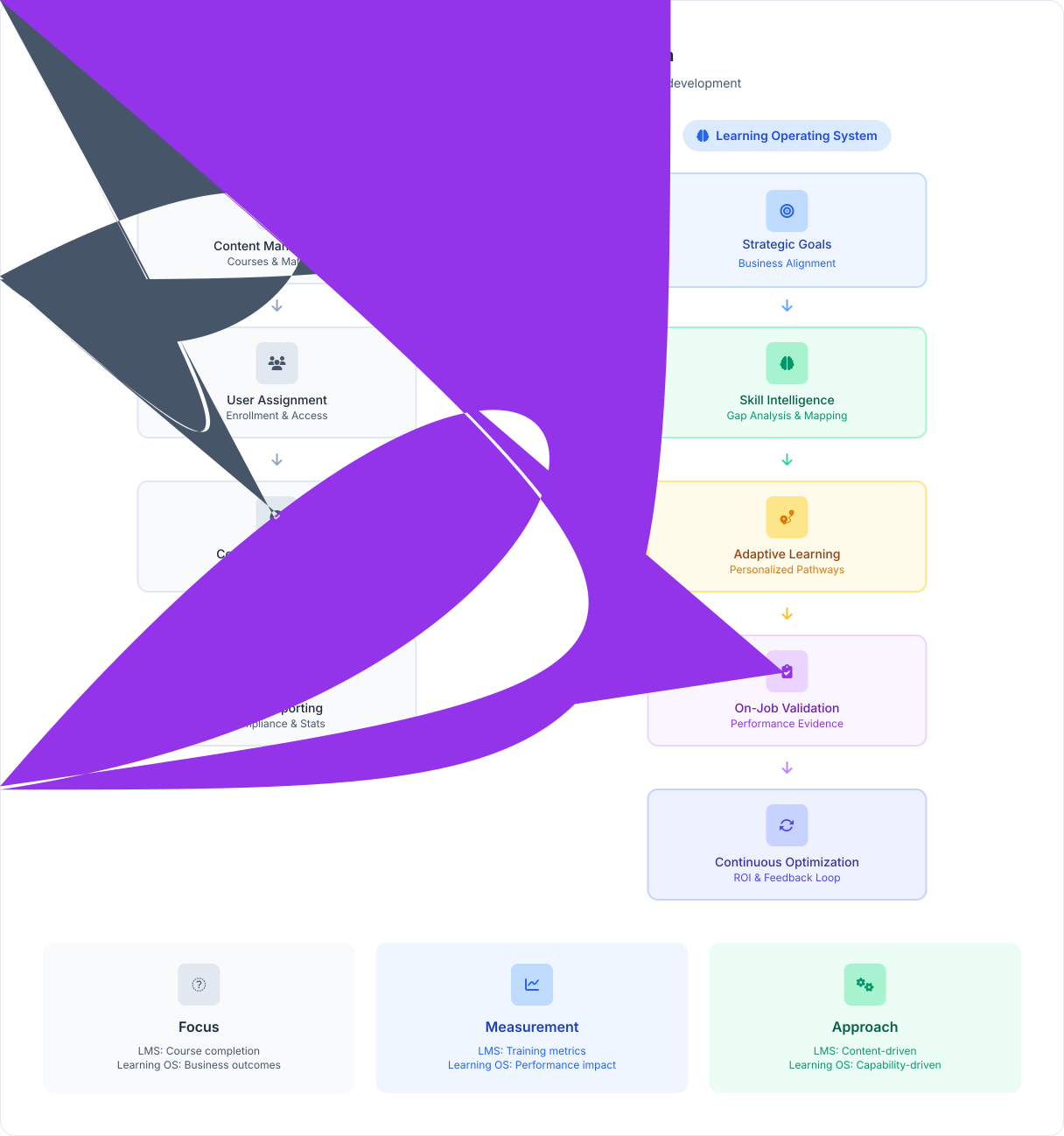
The most important difference is what the system is optimizing for. A traditional LMS optimizes learning administration (courses, enrollments, completion). A Learning Operating System optimizes workforce capability (skill readiness, on-job performance, and measurable business outcomes). That makes the Learning OS the inevitable upgrade for organizations that need skilling to move with strategy — not behind it.
Traditional LMS
Great for running training programs at scale: cataloguing, assigning, tracking completion, issuing certificates, and producing compliance reports. The limitation is structural — it treats capability as a proxy (courses completed) rather than an evidence-backed signal (skills demonstrated on the job). As a result, it struggles to justify budgets, forecast readiness, or drive continuous performance improvement.
Learning Operating System
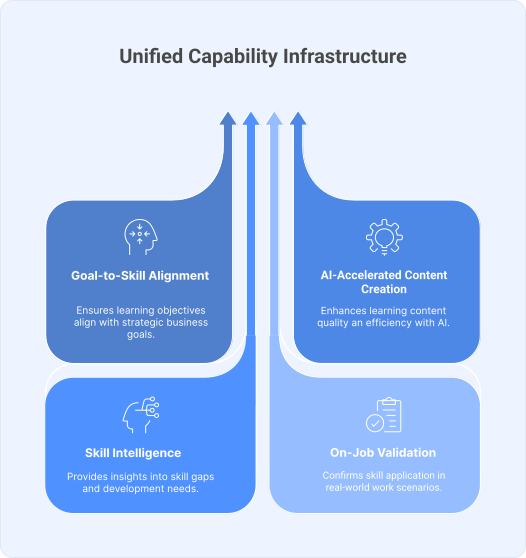
Designed as capability infrastructure. It unifies goal-to-skill alignment, AI-accelerated content creation, skill intelligence, on-job validation (OJEs), and feedback-driven optimization. Because the system is evidence-based, leaders get visibility into proficiency and can tie interventions to outcomes — making skilling a predictable lever for executing business goals.
Enterprise Use Cases
A Learning OS matters most when organizations need to scale execution across roles, locations, and teams. Below are common use cases where “traditional LMS workflows” hit their ceiling—and where a Learning OS becomes the inevitable upgrade.
CHRO / CLO: Goal-aligned skilling portfolio
Move from “training calendars” to a skilling portfolio that is anchored to business goals. Prioritize roles and skills that affect revenue, customer experience, quality, and risk—and prove progress with evidence, not assumptions.
- • Goal → role coverage dashboards for leadership reviews
- • Skill proficiency baselines and quarterly lift targets
- • ROI narratives built from outcome metrics + evidence trails
Operations: Reduce execution variance
Standardize SOP execution across locations and shifts. Combine learning delivery with on-job validation, audits, and supervisor feedback—so performance improves in the real world, not just in the LMS.
- • Rapid SOP rollouts with offline access for field teams
- • OJEs and audits linked to the exact skills being taught
- • Automated refreshers triggered by poor scores or incidents
Compliance & Risk: Evidence-backed readiness
Compliance is not “completion.” It is readiness. Use proctored assessments, supervised validations, and audit trails to prove that critical skills were learned and applied—especially in regulated or high-risk environments.
- • Proctored exams for high-stakes certifications
- • Audit-ready logs of evidence and proficiency changes
- • Automated re-certification policies and reminders
Rapid scale: Onboarding + role readiness
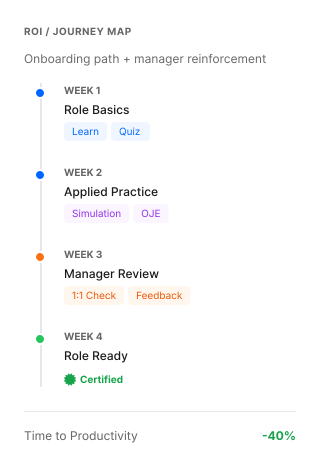
High-growth organizations struggle with consistent onboarding and readiness. A Learning OS makes readiness measurable through role-based journeys, validations, and manager reinforcement—reducing time-to-productivity.
- • Role-ready checklists and skill baselines by cohort
- • In-video questions and micro-validations to reduce drop-off
- • Manager “reinforcement tasks” built into the journey
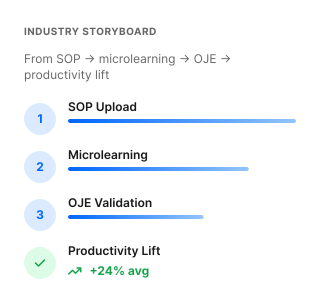
Knowledge at scale: SOPs to action
Centralize SOPs and operational knowledge, then convert them into training assets, quizzes, and validations. The OS ensures knowledge is not “stored”—it is operationalized.
- • Central knowledge repository with search + governance
- • AI-assisted conversion of docs into learning modules
- • Version control + auto-refresh assignments when SOPs change
IT & Enterprise Architecture: Platform fit
Evaluate the OS as part of your enterprise stack: identity, HRMS data sync, APIs, auditability, and exportability. A Learning OS should integrate cleanly, not create another silo.
- • SSO + role-based access for evaluators and managers
- • HRMS integration for org structure + manager mapping
- • API-first exports for BI and downstream analytics
Frequently Asked Questions
These FAQs are designed to be practical—covering terminology, buying considerations, implementation, timelines, and how a Learning OS differs from a traditional LMS.
Run Workforce Skilling as a System — Not a Set of Courses.
A Learning Operating System is the inevitable upgrade when your organization needs measurable capability—across roles, locations, and business units. If learning is still treated as “activity,” it stays discretionary. When skilling is tied to goals with evidence and outcomes, it becomes strategic.
Align
Start with business goals and translate them into role readiness and skill priorities.
Validate
Capture real evidence—OJEs, proctored tests, audits—so proficiency becomes trustworthy.
Optimize
Use performance feedback loops to continuously improve outcomes, not just completion rates.
Explore Capabilities to see how AI course creation, skills intelligence, OJEs, proctoring, and Knowledge Central come together inside the Learning OS.